
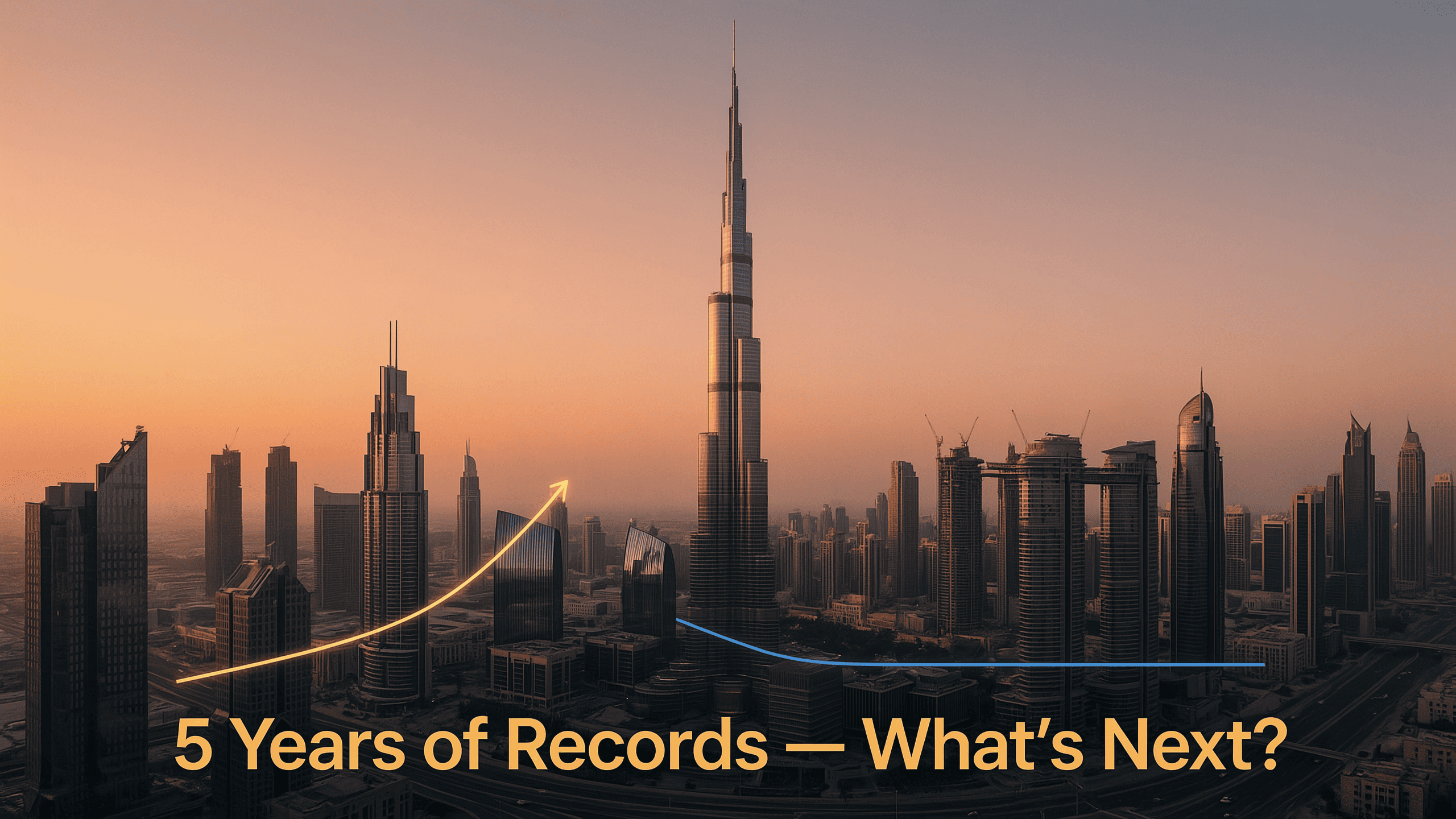
The Dubai real estate market has been running at full speed over the past five years. Records fell one after another, prices climbed, and demand consistently outpaced supply. By 2026, however, the rhythm has shifted. The Dubai real estate market is no longer racing – it is entering a phase of deliberate choice.
2021–2025: The Years That Changed Everything
The pandemic became an unexpected starting point. Dubai opened earlier than others, offering a safe haven for capital and a comfortable lifestyle. Consequently, those who decided to buy in 2021 are now looking at their investments with significant gains.
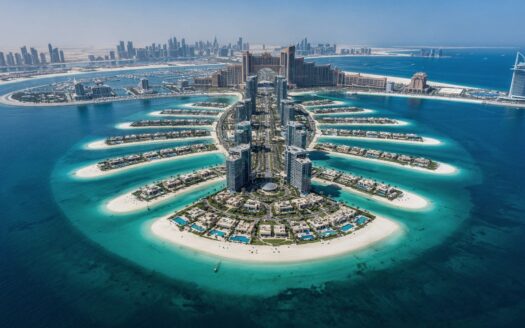
Some areas showed phenomenal growth. For example, Jumeirah Islands rose by 153% over five years – from 1,523 to 3,844 dirhams per square foot. Similarly, Jumeirah Golf Estates gained 119%, while Jumeirah Lake Towers (JLT) increased by 115%. Palm Jumeirah also grew by 83%. These are not just numbers. They show how the right location and a quality asset can multiply capital many times over.
Total sales over five years exceeded 2 trillion dirhams. Three key factors drove this growth: population increases, investor confidence, and a persistent imbalance between supply and demand.
2026: The Market Matures
The biggest shift in 2026 is a change in behavior. Speculators who bought “on a whim” are stepping aside. In their place are strategic investors, who now make up about 40% of the market. They buy not to flip tomorrow, but to preserve and grow capital over years.
Today’s buyers have become more discerning. They examine the developer’s reputation, project quality, payment terms, and long-term value. Unlike the 2014 market, where hype drove decisions, today’s choices are based on data and logic.
Money is also flowing into quality. The share of transactions above 5 million dirhams has grown. In the first six months of 2026, 296 deals worth over $10 million. Clearly, capital is moving into the best assets.
Remarkably, 94.91% of all homes scheduled for delivery in 2026 by leading developers are already sold. Furthermore, 71.45% of the entire four-year construction volume (2026–2029) has already found buyers. This level of confidence is unmatched by any other housing market in the world.
What’s Next? Three Key Trends
1. The market is stabilizing, not crashing
The quarterly decline in the ValuStrat index for the first time since 2020 signaled that the era of easy money is fading. However, this is not a crisis – it is normalization. The market is cooling from record highs, but not collapsing. As a result, ValuStrat forecasts residential capital value growth of around 10% in 2026 (17.7% for villas and 7.4% for apartments).
2. Villas remain the most reliable asset
In the first half of 2026, ultra-premium villa transactions rose by 34% compared to the same period last year. The reason is simple: villa supply is limited, while family demand remains strong.
3. The premium segment is the most resilient
Investors with portfolios above 100 million dirhams expect stability in the coming year and growth over a three-year horizon. Therefore, branded residences, waterfront properties, and villas in established districts remain structurally undersupplied.
What Does This Mean for You?
Dubai’s real estate market has travelled from recovery to records and is now entering a mature phase. This is no longer a playground for speculation. Instead, it is territory for thoughtful, strategic decisions.
In 2021, those who took the risk when others hesitated came out ahead. In 2026, those who see value in stability and long-term growth will win.
Today, the winners are not those looking for the cheapest deal, but those choosing the best. The best location, the best developer, the best asset. The market has become more transparent, more predictable, and more reliable – and that opens new doors for those ready to look ahead.
Lilia Ibragimova
Founder of Alira Real Estate
📞 +971 58 833 7903